
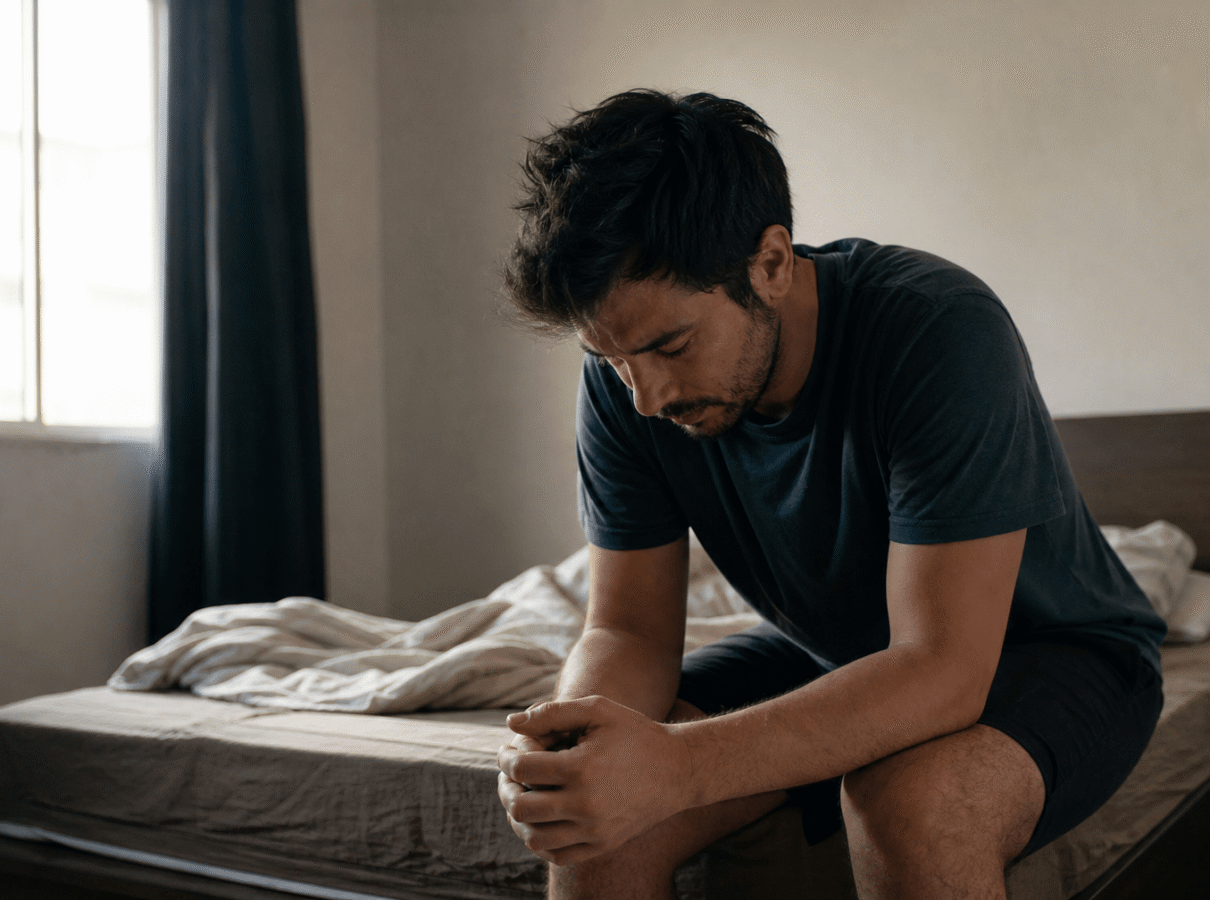
What Happens When You Stop Taking Kratom Cold Turkey?
With Tennessee’s full kratom ban taking effect July 1, 2026, many people who use kratom daily are facing a difficult reality: the supply disappears, and withdrawal follows. Some will try to stop on their own without tapering or medical support. This is called going cold turkey, and for people with significant kratom dependence, it carries real clinical risks worth understanding before that date arrives.
Table of Contents
- What Happens When You Stop Taking Kratom Cold Turkey?
- Understanding Kratom Dependence
- What Happens in Your Brain When You Stop?
- Kratom Cold Turkey Withdrawal Timeline
- Physical Withdrawal Symptoms
- Psychological Withdrawal Symptoms
- Why Cold Turkey Is Risky
- Medical Support vs. Cold Turkey
- How Provive Wellness Can Help
- Frequently Asked Questions
What Happens When You Stop Taking Kratom Cold Turkey?
Stopping kratom cold turkey means discontinuing use abruptly — no gradual dose reduction, no medical oversight. For occasional users this may produce mild discomfort. For people with heavy, daily, long-term use, stopping suddenly can produce a withdrawal syndrome that ranges from genuinely uncomfortable to clinically serious.
The U.S. Food and Drug Administration (FDA) has formally identified kratom’s potential for physical dependence and withdrawal. Kratom’s active alkaloids — mitragynine and 7-hydroxymitragynine — act on opioid receptors similarly to prescription opioids, which is why kratom withdrawal often mirrors opioid withdrawal and why cold turkey discontinuation after prolonged use deserves careful clinical consideration.
Understanding Kratom Dependence
Physical dependence develops when the brain adapts to the regular presence of a substance and reorganizes its chemistry around it. This is not a moral failure — it is a neurobiological reality recognized by the National Institute on Drug Abuse (NIDA), the Substance Abuse and Mental Health Services Administration (SAMHSA), and the broader addiction medicine community.
Kratom dependence can develop quickly. Research published on PubMed has documented withdrawal syndromes in users who had been using kratom for as few as several weeks. Once dependence is established, stopping suddenly forces the brain to recalibrate without the substance it has relied on — producing what we call withdrawal.
What Happens in Your Brain When You Stop Kratom?
Kratom’s active compounds bind to mu-opioid receptors — the same receptors targeted by opioids like morphine and oxycodone. With regular use, the brain reduces its own natural endorphin production and downregulates receptor sensitivity in response. When kratom is removed abruptly, the brain is suddenly underactive in systems that regulate mood, pain, energy, sleep, and gastrointestinal function.
A review published in Frontiers in Psychiatry confirmed that the opioid receptor component is the dominant driver of most kratom physical withdrawal symptoms. The brain’s attempt to reregulate itself is what produces the symptoms people experience in the first hours and days after stopping.
Kratom Cold Turkey Withdrawal Timeline
Hours 6 to 24: Onset
Initial symptoms appear within 6 to 24 hours of the last dose: restlessness, irritability, early muscle aches, and cravings. Many people describe a building sense of dread or anxiety as the first signal withdrawal is starting.
Days 1 to 3: Peak Withdrawal
The first two to three days are the most intense. Physical symptoms peak — severe muscle cramps, profuse sweating, chills, nausea, vomiting, diarrhea, insomnia, and elevated heart rate. Psychologically, this phase brings severe anxiety, agitation, and low mood.
Days 4 to 7: Acute Phase Subsides
The most severe physical symptoms begin to ease after day three or four, though significant discomfort continues. Sleep disruption, mood instability, and low energy persist. Cravings remain strong.
Weeks 2 to 4 and Beyond: Post-Acute Withdrawal (PAWS)
Many kratom users experience post-acute withdrawal syndrome (PAWS) — persistent lower-grade symptoms including depression, anxiety, fatigue, and sleep disruption lasting weeks or months beyond the acute phase. PAWS is one of the most common drivers of relapse. SAMHSA notes that ongoing clinical support significantly reduces relapse risk during this vulnerable period.
Physical Symptoms of Kratom Cold Turkey Withdrawal
Physical symptoms can be severe enough to drive relapse even in highly motivated people. Common physical symptoms include:
- Intense muscle aches, cramps, and joint pain
- Profuse sweating and chills
- Nausea, vomiting, and diarrhea
- Insomnia and severe sleep disruption
- Elevated heart rate and blood pressure
- Runny nose and watery eyes (mirroring opioid withdrawal)
- Tremors and restless legs
- Loss of appetite and weight loss
- Fatigue and physical weakness
- Headaches
Research published in the Journal of Addiction Medicine has documented kratom withdrawal syndromes that closely mirror opioid withdrawal in both symptom profile and physiological mechanism.
Psychological Symptoms of Kratom Cold Turkey Withdrawal
The psychological dimension is frequently underestimated and for many people is harder to manage than the physical symptoms:
- Severe anxiety and panic
- Irritability and agitation
- Depression and hopelessness
- Intense, persistent cravings
- Difficulty concentrating
- Emotional dysregulation and mood swings
- In severe cases, suicidal ideation
The American Psychiatric Association (APA) recognizes that psychological withdrawal components are clinically significant and require evidence-based treatment. For people with pre-existing mental health conditions, symptoms are often significantly more severe — which is why dual diagnosis treatment is essential to effective kratom recovery.
Why Cold Turkey Is Risky
High Relapse Risk
Withdrawal severity is one of the strongest predictors of relapse. When symptoms become unbearable, the most immediate relief is resuming use. The National Institute on Drug Abuse notes that unsupported abrupt discontinuation significantly increases relapse risk compared to structured treatment.
Return to Other Opioids
Many Tennesseans began using kratom to manage opioid cravings or step away from prescription painkillers. When kratom withdrawal becomes intolerable with no clinical support in place, the risk of returning to other opioids rises significantly. In Tennessee’s current fentanyl environment, this carries life-threatening implications. CDC overdose data consistently documents fentanyl-contaminated supply as responsible for the overwhelming majority of overdose deaths.
Medical Complications
Severe withdrawal can cause dehydration, elevated blood pressure, and cardiovascular stress. The U.S. Department of Health and Human Services consistently recommends medically supervised withdrawal management over unsupported cold turkey for this reason.
Mental Health Crisis
Acute depression accompanying kratom cold turkey can reach crisis levels, particularly for people who were self-medicating underlying mood disorders. The National Alliance on Mental Illness (NAMI) emphasizes that co-occurring mental health conditions require integrated clinical management during withdrawal.
Medical Support vs. Cold Turkey
Medically supervised withdrawal management changes outcomes in several important ways:
- Medication-Assisted Treatment (MAT): FDA-approved buprenorphine (Suboxone) is effective for kratom withdrawal because kratom and buprenorphine act on the same opioid receptors. SAMHSA’s guidelines identify MAT as the gold standard for opioid-related dependence, including kratom.
- Medical monitoring: Clinical staff monitor vital signs, address dehydration, and intervene quickly if symptoms escalate.
- Psychiatric support: A prescribing psychiatrist can address acute anxiety and depression, reducing the suffering that drives relapse.
- Structured therapy: Individual and group therapy begin building recovery skills from day one.
The American Psychological Association supports evidence-based, medically supervised approaches to opioid-like withdrawal as the clinical standard of care. The World Health Organization (WHO) similarly recommends medically assisted withdrawal management as best practice globally.
How Provive Wellness Can Help
Provive Wellness in Brentwood, Tennessee offers a full continuum of care for people navigating kratom withdrawal and early recovery. Whether you are preparing ahead of July 1 or calling on July 2 in the middle of withdrawal, our clinical team is ready to meet you where you are.
Our kratom withdrawal treatment program includes MAT with buprenorphine, Partial Hospitalization Program (PHP) running 5 to 7 days per week, Intensive Outpatient Program (IOP) running 3 to 6 days per week, telehealth, and dual diagnosis psychiatric care for co-occurring anxiety, depression, and PTSD.
We accept most major insurance plans including Aetna, BlueCross BlueShield of Tennessee, UnitedHealthcare, Cigna, Optum, TRICARE, and the VA Community Care Network (CCN). Call (615) 640-9994 for a free, confidential benefits verification and clinical assessment. Same-week appointments are available.
If you are not ready to call, the SAMHSA National Helpline is available 24/7 at 1-800-662-4357 at no cost.
Frequently Asked Questions
Is kratom withdrawal dangerous?
Kratom withdrawal is rarely life-threatening in otherwise healthy adults, but it can cause serious complications including dehydration, cardiovascular stress, and psychiatric crisis — particularly for people with underlying health conditions. Medical supervision is always the safer choice.
How long does kratom cold turkey withdrawal last?
Acute symptoms typically peak within the first two to three days and begin to ease by day five to seven. Many people then experience post-acute withdrawal syndrome (PAWS) for weeks to months, with persistent fatigue, depression, anxiety, and sleep disruption.
Can I manage kratom withdrawal at home?
Some people with mild dependence manage at home with supportive care. For people with significant dependence, daily use, or co-occurring mental health conditions, home management greatly increases relapse risk. Clinical support — even via telehealth — meaningfully improves outcomes.
What medications help with kratom cold turkey withdrawal?
Buprenorphine (Suboxone) is the most evidence-supported medication for kratom withdrawal because kratom acts on opioid receptors. It reduces physical symptoms and cravings and is available through Provive’s MAT program. Supportive medications for sleep, anxiety, and GI symptoms may also be used.
Does Provive offer same-week appointments for kratom withdrawal?
Yes. Provive is prioritizing kratom assessments given the urgency of the July 1 ban. Call (615) 640-9994. Most patients are seen within days of their initial call.
What if I do not have insurance?
Most major insurance plans cover kratom withdrawal treatment under federal mental health parity laws. If you are uninsured, SAMHSA’s FindTreatment.gov connects people with no-cost or sliding-scale resources. Ask our admissions team about private pay options as well.
Ready to stop kratom safely? Call Provive Wellness in Brentwood, TN at (615) 640-9994 for a free, confidential consultation. Most insurance accepted. Same-week appointments available.


